
My colleague Frances Hall and I had the privilege of presenting a Webinar titled “From Data to Decisions: The Power of Data to Transform Preclinical Research and Discovery.”
Our webinar took the audience on a journey through the entire drug discovery and development process, showing how data insights and in silico technologies can enable decision-making. In this presentation, we held ourselves to the standard of assessing the solutions presented against the pillars of transparency, availability, interpretability, consistency, and reliability. As the year draws to a close, I thought it would be a wonderful way to wrap things up by summarizing some of the exciting topics we explored during that session.
Target Safety Assessment (TSA)
TSAs integrate bioinformatics, pharmacology, and toxicology to understand any potential unintended adverse consequences of target modulation. Such information contributes to early decisions on risks and benefits of progressing with a target. Robust TSAs provide transparency and reproducibility, helping teams fail fast when necessary and focus on the most promising candidates. Their use, however, spans across several contexts, for example, the TSA framework can be applied to the development of Target Carcinogenicity Assessments (TCA) and weight of evidence packages.
In Silico Methodologies
When experimental data are limited, computational toxicology is used to fill data gaps. Approaches such as (Q)SAR and read-across provide assessments of toxicological activity based on molecular structure. Such methods reduce reliance on testing protocols, accelerate timelines, and support regulatory frameworks such as ICH M7. Combined with expert review, they deliver defensible, reproducible assessments.
One of the most exciting updates this year was the publication of the draft ICH Q3E guideline, which introduces a holistic framework for assessing Extractables and Leachables (E&L). E&L substances can potentially migrate from packaging or container systems into drug products, and, as such, their exposure levels require safety qualification.
The new guideline emphasizes risk-based approaches for identifying, qualifying, and controlling E&L exposure. The guideline requires the use of methodologies aligned with ICH M7 to identify high-risk mutagenic leachables and read-across strategies to derive Permitted Daily Exposure (PDE) levels for non-mutagenic E&L.
Instem has actively supported efforts to define procedures around E&L assessments, including an assessment of E&L chemical class characterization (manuscript submitted) and drafting PDEs to support the development of the guideline.
Looking Ahead
Beyond regulatory applications, data-driven approaches are shaping a future where Virtual Control Groups (VCGs) reduce animal use without compromising scientific rigor. Collaborative initiatives such as VICT3R promote industry-wide adoption of virtual control groups. Additionally, predictive models and integrated workflows (such as read-across) continue to improve efficiency and confidence in safety assessments.
As Frances and I said during the webinar, “The strength of our decisions depends on the strength of our data.” That principle will continue to guide innovation and progress within Instem and the wider scientific community in the year ahead.
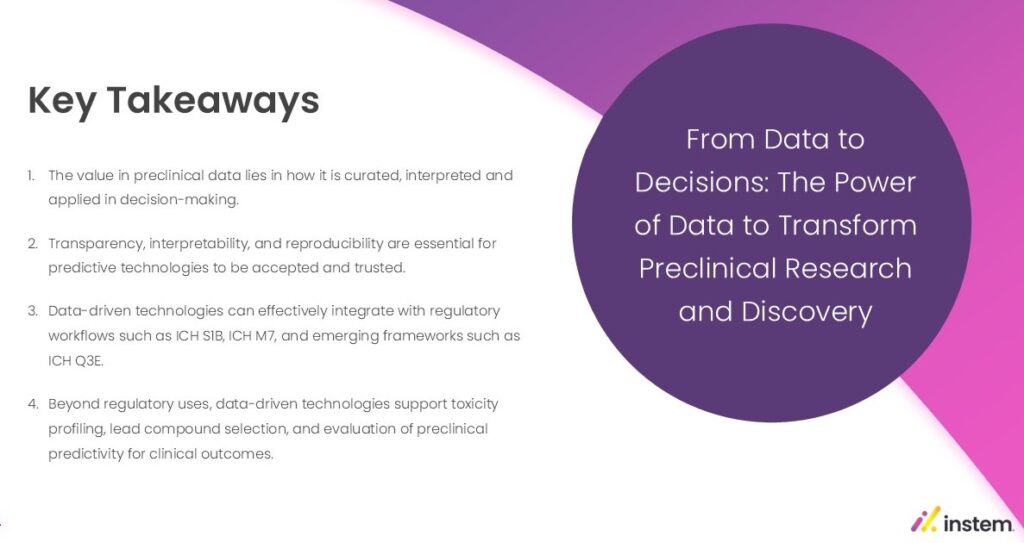
Figure 1: Data to Decisions: The Power of Data to Transform Preclinical Research and Discovery
Happy Holidays and a joyful New Year from all of us at Instem!

📢 Watch the full Webinar: Data to Decisions: The Power of Data to Transform Preclinical Research and Discovery
Take a deep dive into how in silico and data insights technologies can support the entire drug discovery and development pipeline.
Please contact us to speak to an expert or learn more about Instem’s In Silico solutions here.